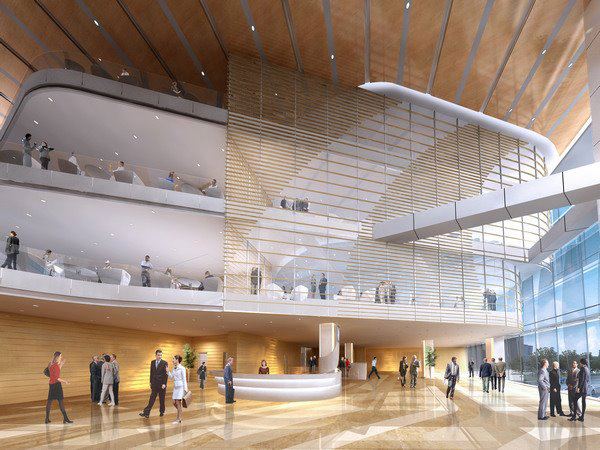
The New Delhi railway station is getting a
sleek new look. From new infrastructure to technological enhancements,
the station is on track to reach world-class status by 2010.Other than
completion of the mammoth Route Relay Interlocking System (RRI), that
came after circuiting an area of about 3.5km using 700km of cables, the
station plans to offer a lot more to its passengers by the year-end. A
sprawling new building with enhanced passenger amenities, international
graphic signs, disabled-friendly platforms, shopping arcade, food court
and the list goes on.The completion of the first part of the renovation
came at a cost of Rs 71 crore. Apart from the route relay interlocking
system that costed Indian Railways Rs 27 crore, the maintenance facility
of the station has also been upgraded by the addition of a track. A new
track has also been added to remove the bottleneck from the Sadar
Bazaar side.‘‘The completion of RRI has made sure that there was no
conflicting movement on the tracks. Not just that, the RRI will also
drastically reduce the chances of rail traffic congestion,’’ said a
Northern railway spokesperson.The entire RRI system is controlled from
power cabin where the operators have a layout in front of them
indicating the occupied and unoccupied tracks. With RRI capable of
handling 1,278 routes, the station has also entered the Guiness Book of
World Records. According to a railway official, the transformation of
New Delhi Railway Station is not just because of the Commonwealth Games
but also to handle 8-12% growth in passenger traffic in last 2-3 years.
Northern Railways chief spokesperson, Rajiv Saxena said, “With the
increase in passenger rush, its not just the rail traffic that has to be
smoothened but facilities for passengers comfort are also to be added.
To meet this demand, railways is carrying out the required changes.’’
The station has also added four platforms (two of which are to be
completed shortly), which will ease out the problem of trains getting
held up because of the unavailability of platforms. Saxena added,
‘‘Going by the fact that the during the peak seasons the station handles
more than 4 lakh passengers, the additional platforms will also offer
greater passenger space.” The new 80,000-square foot station building at
the Ajmeri gate entrance will only make things better. According to a
railway official, it will be a state-of-the-art building. Expected to be
ready by December-end, it will have a touch-screen enquiry system,
plasma TV but also an AC ticketing area. The building will also house
both AC and non-AC waiting rooms and dormitories.
Showing posts with label india. Show all posts
Thursday, 21 June 2012
Saturday, 16 June 2012
Cybertecture International
Cybertecture is the ultimate expression
of innovative art married with functional needs in consideration of the
environment and humanity. the new commercial complex located in Mumbai,
India ”the Capital” deliberately reveals her calmness, gracefulness and
elegance. It is an extremely challenging work to develop a
revolutionary design concept for an office with AAA- grading and
achieving over 80% efficiency simultaneously. It integrated the
sustainable concept, form and functionality that inspire the office
building design and urban context in India like never before.
Architects: James Law Cybertecture International
Project: The Capital
Location: Kurla Complex, Bandra, Mumbai India
Expected Completion Date : 2nd qtr 2011(estimated)
Use: Office
total GFA: ~ 66347 sq.m.
Bldg. Scale: G+ 17 Levels
Parking Lot: ~ 700 Lots
Software used: AutoCAD, Sketchup and 3DSMax

Environmental
Amidst constant contest with design criteria and constrains, James Law Cybertecture international limited always positioned the environmental issues in the top priority. At the podium level, diffusers installed at the ceiling level reflected natural light into the atrium which significantly reduces the lighting energy demand. Spot cooling system is also adopted in the atrium to avoid unnecessary cooling load. Openable windows in office floors allow natural and cross ventilation in daily operation.
For the building enclosure, there are three major features in the building. An incredible stepped-in glazed valley façade is created at the West elevation of the building. the facade is stepped while each floor supported by feature columns and cantilevered in a way that the building itself act as a shading device. A masterpiece egg shape structure inscribed inside the wonderful sky lobby at the East elevation. there are natural waterfalls and vegetations situated on both sides of the sky lobby. they enhance the cooling effect of the atrium. People can also enjoy the beautiful scenery in this communal space. the sparkling LED stripes protruded on the facade of “the capital” do not only act as an urban information display device, but also play the role of sun shading devices. the interior and exterior cladding system are adopted PVDF coating which are easily maintain and UV resisting.
Smart parking
One of the innovation designs of “the Capital” is the intellectual parking system. By means of using internet and smart card system, occupants can log in and command the system in their office in prior to picking up their cars. Therefore, the lap time can be shortened.
James Bio
Widely respected as a modern visionary, James Law has won numerous international awards on architectural design and leadership, highlighted by the achievements of Young Global Leaders 2010 in World Economic Forum and CNBC International Architecture Awards during 2009. Accredited by coining the notion of Cybertecture, James leads the charge in blending new materials and technologies within architecture, to pave the way for innovating the fabric of mankind.
James Law is the visionary founder and Chief Cybertect at James Law Cybertecture International, formed on the first day of the new century in 2001. Dedicated to blend cyber technology within modern architecture, James is paving the way for people to live the future in a seamless and enjoyable manner.
Graduated with a degree in architecture from University College London in 1992, James consolidated his knowledge in architecture, buildings, design, and technology at prestigious Japanese architect firm Itsuko Hasegawa in 1994 and became Director at world renowned design firm Gensler International in 1997.
In reward for James’s passion and contribution, James has won numerous international awards on architectural design and leadership, highlighted by the achievements of Young Global Leaders 2010 in World Economic Forum and CNBC International Architecture Awards during 2009.
Within the architecture spectrum, he achieved the Royal Institute of Architects Award in 2003, which also earned him to become a member of the Royal Institute of British Architects. James achievements are further highlighted with Asian Innovation Awards 2004, CNBC International Property Awards 2007, and CNBC Asia Pacific Commercial Property Awards 2009.
to enlighten fellow futuristic thinkers of his time, James is an adjacent professor at Korean Advanced Institute of Science and technology, a board member of the Hong Kong Design Center and author of his book “Cybertecture Now: James Law Cybertecture” to be published in 2010. Anticipating the health and wellness revolution, especially surrounding telemedicine, James is launching the Cybertecture Health System to address the growing needs of globalized citizens.
Architects: James Law Cybertecture International
Project: The Capital
Location: Kurla Complex, Bandra, Mumbai India
Expected Completion Date : 2nd qtr 2011(estimated)
Use: Office
total GFA: ~ 66347 sq.m.
Bldg. Scale: G+ 17 Levels
Parking Lot: ~ 700 Lots
Software used: AutoCAD, Sketchup and 3DSMax

Environmental
Amidst constant contest with design criteria and constrains, James Law Cybertecture international limited always positioned the environmental issues in the top priority. At the podium level, diffusers installed at the ceiling level reflected natural light into the atrium which significantly reduces the lighting energy demand. Spot cooling system is also adopted in the atrium to avoid unnecessary cooling load. Openable windows in office floors allow natural and cross ventilation in daily operation.
For the building enclosure, there are three major features in the building. An incredible stepped-in glazed valley façade is created at the West elevation of the building. the facade is stepped while each floor supported by feature columns and cantilevered in a way that the building itself act as a shading device. A masterpiece egg shape structure inscribed inside the wonderful sky lobby at the East elevation. there are natural waterfalls and vegetations situated on both sides of the sky lobby. they enhance the cooling effect of the atrium. People can also enjoy the beautiful scenery in this communal space. the sparkling LED stripes protruded on the facade of “the capital” do not only act as an urban information display device, but also play the role of sun shading devices. the interior and exterior cladding system are adopted PVDF coating which are easily maintain and UV resisting.
Smart parking
One of the innovation designs of “the Capital” is the intellectual parking system. By means of using internet and smart card system, occupants can log in and command the system in their office in prior to picking up their cars. Therefore, the lap time can be shortened.
James Bio
Widely respected as a modern visionary, James Law has won numerous international awards on architectural design and leadership, highlighted by the achievements of Young Global Leaders 2010 in World Economic Forum and CNBC International Architecture Awards during 2009. Accredited by coining the notion of Cybertecture, James leads the charge in blending new materials and technologies within architecture, to pave the way for innovating the fabric of mankind.
James Law is the visionary founder and Chief Cybertect at James Law Cybertecture International, formed on the first day of the new century in 2001. Dedicated to blend cyber technology within modern architecture, James is paving the way for people to live the future in a seamless and enjoyable manner.
Graduated with a degree in architecture from University College London in 1992, James consolidated his knowledge in architecture, buildings, design, and technology at prestigious Japanese architect firm Itsuko Hasegawa in 1994 and became Director at world renowned design firm Gensler International in 1997.
In reward for James’s passion and contribution, James has won numerous international awards on architectural design and leadership, highlighted by the achievements of Young Global Leaders 2010 in World Economic Forum and CNBC International Architecture Awards during 2009.
Within the architecture spectrum, he achieved the Royal Institute of Architects Award in 2003, which also earned him to become a member of the Royal Institute of British Architects. James achievements are further highlighted with Asian Innovation Awards 2004, CNBC International Property Awards 2007, and CNBC Asia Pacific Commercial Property Awards 2009.
to enlighten fellow futuristic thinkers of his time, James is an adjacent professor at Korean Advanced Institute of Science and technology, a board member of the Hong Kong Design Center and author of his book “Cybertecture Now: James Law Cybertecture” to be published in 2010. Anticipating the health and wellness revolution, especially surrounding telemedicine, James is launching the Cybertecture Health System to address the growing needs of globalized citizens.
Thursday, 14 June 2012
The Taj Mahal, Agra, India
This is truly the 17th century ideal fusion of between architecture, engineering and art. The Taj Mahal was built by the Mughal Emperor Shah Jahan in the memory of his third wife. The central structure of the complex and the most popular piece is made of marble with a height of 115 feet (35 meters). The top of the dome features a lotus design, which accentuates its height. This is also emphasized by tall decorative spires that extend from the edges of the base walls.
The central dome is surrounded by four smaller domed kiosks that replicate the center design and allow sunlight to aluminate the interior. The dome and the kiosks are topped by gilded finals. 130 feet (40 meters) tall minarets square the structure. One of the main concerns in those times was the fear of high structure collapsing. That’s why the minarets were built slightly outside the plinth, so that in the event of falling down, they won’t fall over the dome. In all, 28 precious stones were inlaid into the marble walls, including sapphire, crystal, turquoise and many more.
Labels:
Agra,
civil,
engineer,
engineering,
Incredible Civil,
india,
Mahal,
Taj,
the
Thursday, 7 June 2012
Gift City INDIA
Main Concept
Fulfillment of human needs for:
· Safe and clean environment
· Food & Shelter,
· Education,
· Arts
· Culture,
· Useful and satisfying employment
Objectives
The Concept of GIFT is based on the following objectives :
· To develop a new format for globally benchmarked Integrated City.
· To propose a road map for fast track development and implementation.
· To make the city scalable in each & every aspect for a distant future.
· To derive the city format from fast changing lifestyles & new technologies.
· To achieve an image of Global city, that keeps pace with modern technologies.
Urban Planning
GIFT promises to be a Central Business Hub, not just for India but also for the rest of the world. Bestowed with world class infrastructure, it is poised to set a new paradigm of Urban Planning. The development of GIFT offers a significant opportunity to be a testbed to drive reforms and innovation in various fields including in delivery systems, local government, physical
planning, infrastructure development, environmental protection and so on. Getting these foundation principles right is crucial to plan and execute the development strategies.

Life and Livability/Ecological Integrity
Propelled by a competitive economy anchored on commerce and related industry, GIFT, envisaged as an EcoCity, will serve as the Vibrant Hub of Western India and as a habitat showcasing business oriented, environmentally sensitive growth with equity. The fundamental principles of life and livability lays the foundation for the city.
Fulfillment of human needs for:
· Safe and clean environment
· Food & Shelter,
· Education,
· Arts
· Culture,
· Useful and satisfying employment
Objectives
The Concept of GIFT is based on the following objectives :
· To develop a new format for globally benchmarked Integrated City.
· To propose a road map for fast track development and implementation.
· To make the city scalable in each & every aspect for a distant future.
· To derive the city format from fast changing lifestyles & new technologies.
· To achieve an image of Global city, that keeps pace with modern technologies.
Urban Planning
GIFT promises to be a Central Business Hub, not just for India but also for the rest of the world. Bestowed with world class infrastructure, it is poised to set a new paradigm of Urban Planning. The development of GIFT offers a significant opportunity to be a testbed to drive reforms and innovation in various fields including in delivery systems, local government, physical
planning, infrastructure development, environmental protection and so on. Getting these foundation principles right is crucial to plan and execute the development strategies.
Life and Livability/Ecological Integrity
Propelled by a competitive economy anchored on commerce and related industry, GIFT, envisaged as an EcoCity, will serve as the Vibrant Hub of Western India and as a habitat showcasing business oriented, environmentally sensitive growth with equity. The fundamental principles of life and livability lays the foundation for the city.
Transit Oriented Development (TOD)
Transit oriented development (TOD) shall be concentrated near transit nodes to make travel convenient for people and serve as multimodal transport. Each transit node also offers hotel & office with commercial facilities. It shall enhance walk to work concept.
Here is the proposed plan:
1. Diamond Tower
1. Diamond Tower
The tallest tower is located in splendid isolation on the beautiful Fortune Island surrounded by beautiful landscape. The Diamond Tower symbolizes Gujarat’s flourishing diamond industry. Designed to portray the elegant edges of diamond facets, each floor of the tower is different and yet uniquely forming one large diamond.
Plot Area (Sq.Mt) – 28,628
Total Area(Sq.Ft) – 4,286,056
Above Ground – 2,721,372
Below Ground – 1,564,684
Max. Height (in meter) – 410
Max. No. Floors – 84
2. The two Gateway Towers
The tall archways of the Gateway Towers frame the majestic Diamond tower and create a picture perfect setting. Astride the main avenue of the city, the Gateway Towers have elaborate terrace gardens and rooftop restaurant. The Gateway Towers draw this design inspiration from Buland Darwaja and herald India’s arrival in the new millennium.
Plot Area (Sq.Mt) – 39,864
Total Area(Sq.Ft) – 7,682,282
Above Ground – 5,356,978
Below Ground – 1,827,624
Max. Height (in meter) – 350
Max. No. Floors – 83
3. Cocoon Tower (Package T)

A city within a city. One Big organism is what the design metaphorically represents. The design inculcates the notion of a micro system existing in the macro system. The analogy of human body with all its various system of substance the organs, blood vessels, breathing and metabolism system has been interpreted to device the system for the “City Life Body” of blocks.
Area – 14.43 Acres
Height – 220 m
Floor - 56
Area – 14.43 Acres
Height – 220 m
Floor - 56
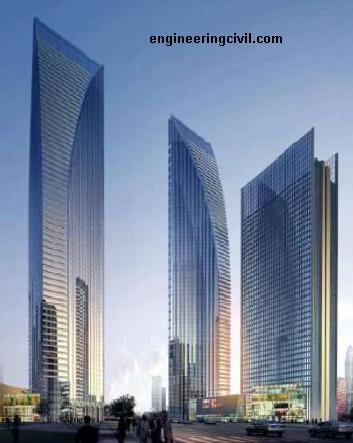
4. Naga Tower (package O)
The Guardian of the city. Naga a powerful symbol in India finds a re-interpretation in these buildings. Truly a magnificent first in the world.
Area – 10.6 Acres
Height – 230 m
Floor – 54
Area – 10.6 Acres
Height – 230 m
Floor – 54
5. Convention Center
It has several halls, auditorium and an opera with sitting capacity exceeding 10,000. It’s design is inspired by Salt Crystals and Dandi March. It will also have Eight museums showcasing the history, art, culture and socio economic life of Gujarat.
Plot Area (Sq.Mt) – 214,550
Total Area(Sq.Ft) – 6,938,554
Above Ground – 3,606,348
Below Ground – 2,997,165
Max. Height (in meter) – 65
Max. No. Floors – 16
It has several halls, auditorium and an opera with sitting capacity exceeding 10,000. It’s design is inspired by Salt Crystals and Dandi March. It will also have Eight museums showcasing the history, art, culture and socio economic life of Gujarat.
Plot Area (Sq.Mt) – 214,550
Total Area(Sq.Ft) – 6,938,554
Above Ground – 3,606,348
Below Ground – 2,997,165
Max. Height (in meter) – 65
Max. No. Floors – 16
Labels:
city,
civil,
engineer,
engineering,
gift,
Incredible Civil,
india
World’s Highest Railway Bridge To be Built In India
With aspiration of becoming a global superpower, India’s construction industry is now thinking beyond the box. Mumbai Worli Sea Link as one of the biggest achievements has boosted the construction industry and now they are building world’s highest railway bridge over Chenab in Reasi in Jammu between two villages Bakkal and Kauri.
The 1.3 km, 359 meters from the river bed is nick named as Sky Bridge and is part of the 73 km Katra-Dharam section of the Udhampur-Srinagar-Baramulla Rail Link USBRL project.
Some facts about this Bridge
1) It will be 19 m higher than the currently tallest rail bridge i.e the bridge on France’s Tarn River (340m)
2) It will be 35 m taller than the Eiffel Tower in Paris.
3) It will be six times the height of the Panvalnadi bridge in Maharashtra which is considered asthe tallest so rail bridge in India so far
1) It will be 19 m higher than the currently tallest rail bridge i.e the bridge on France’s Tarn River (340m)
2) It will be 35 m taller than the Eiffel Tower in Paris.
3) It will be six times the height of the Panvalnadi bridge in Maharashtra which is considered asthe tallest so rail bridge in India so far
Bridge Design
The design of this bridge is divided as
1) A 467 meter steel arch in the centre
2) A 185-meter approach deck from the Bakkal end
3) A 650-meter approach deck from the Kauri end.
The design of this bridge is divided as
1) A 467 meter steel arch in the centre
2) A 185-meter approach deck from the Bakkal end
3) A 650-meter approach deck from the Kauri end.
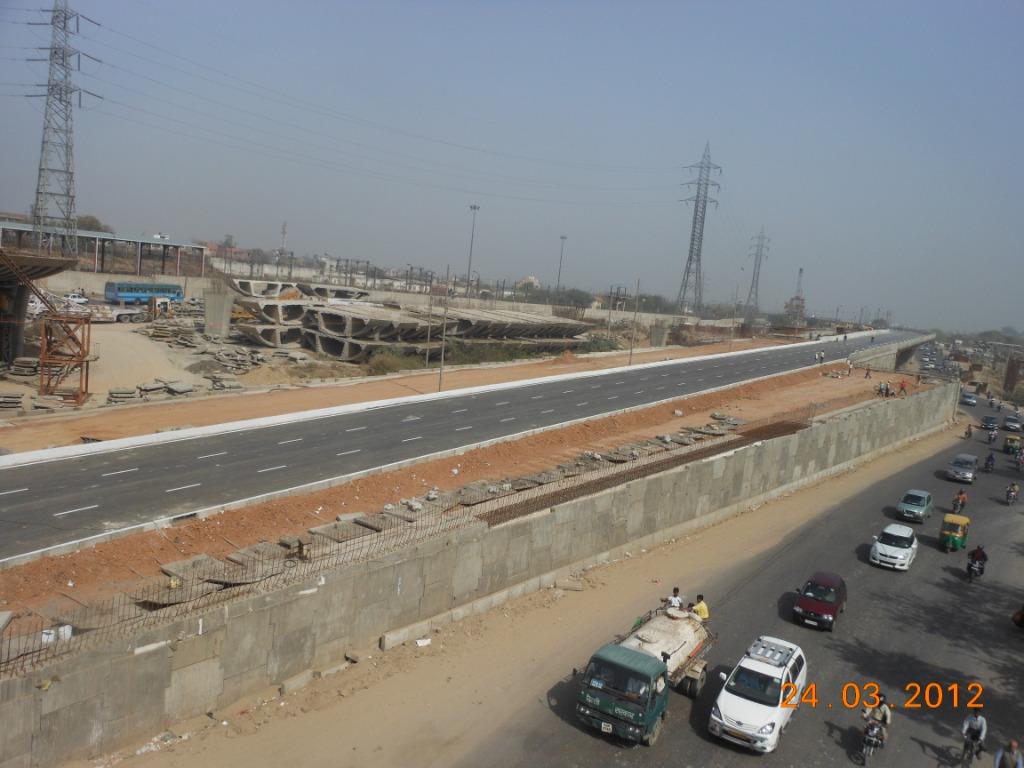
Signature Bridge Project Delhi India
The cable stayed bridge connects to National Highway 1 near existing T-point at Wazirabad on Western bank and Marginal Bund Road at Khajuri Khas on eastern bank of the river Yamuna. The deck of bridge will be composite i.e steel and concrete while pylon will be in steel.
The bridge is expected to be completed in Dec 2012 and will cost around Rs 1,131 crore.
Right Carriage Way Opened for Traffic..
Labels:
bridge,
civil,
delhi,
engineer,
engineering,
Incredible Civil,
india,
project,
Signature
Wednesday, 6 June 2012
Facts About Construction In India
# Sardar Sarovar Dam being executed by the group is the third
largest in the world for volume of chilled concrete to be placed -nearly
7 million cum.
# Indira Sagar a 1000 MW Power house is the second largest surface power house in the country.
# Nathpa Jhakri a 1500 MW Power House is the largest underground power house in India.
# Tehri Dam is the third tallest rockfill dam in the world, and the largest in Asia invloving placement of over 25 million cum of all types of fill material.
# Baglihar Hydroelectric project involved construction of 30km of project road along with three bridges.
# Brahmaputra Guide Bund completed in a record time of 7 months.
# Baspa-II and Chamera-II projects involved continuous concrete shuttering for tunnel lining which is used for the first time in the country.
# Teesta V project has been provided with Jet Grouting curtain is being provided below the coffer dams for the first time in India.
# Alimineti Madhva Reddy Irrigation project is the longest underground face to face tunnel in the world.
# Indira Sagar a 1000 MW Power house is the second largest surface power house in the country.
# Nathpa Jhakri a 1500 MW Power House is the largest underground power house in India.
# Tehri Dam is the third tallest rockfill dam in the world, and the largest in Asia invloving placement of over 25 million cum of all types of fill material.
# Baglihar Hydroelectric project involved construction of 30km of project road along with three bridges.
# Brahmaputra Guide Bund completed in a record time of 7 months.
# Baspa-II and Chamera-II projects involved continuous concrete shuttering for tunnel lining which is used for the first time in the country.
# Teesta V project has been provided with Jet Grouting curtain is being provided below the coffer dams for the first time in India.
# Alimineti Madhva Reddy Irrigation project is the longest underground face to face tunnel in the world.
Labels:
about,
civil,
College Notes,
construction,
engineer,
engineering,
facts,
in,
india
Tuesday, 5 June 2012
India’s Coolest Buildings
Below is the list of some of the coolest buildings of
India. The infrastructure is on boom now and we expect more of such
buildings to come up soon.
1) i-flex solutions, Bangalore
Located at C.V Raman Nagar Bangalore, i-flex building has a peculiar design, architecture and superb infrastructure which distinguishes it from the other buildings . i-flex solutions is a world leader when it comes to provide solutions for Financial Sector.
2) Signature Towers, Gurgaon
Signature Towers have become the best designed office complexes in India due to its unique identity. It has a neat design and is equipped with the latest state of art technology and this is the prime reason that most of the leading multinational and Indian companies have chosen to operate their businesses from Signature Towers. The perfect location just a few hundred meters off the National Highway 8 in Gurgaon adds to the value of these towers.
3) Adobe-India’s Headquarters
Adobe-India’s Headquarters is located at NOIDA, a suburb of New Delhi. It is on an independent plot with a total carpet area of 2,00,000 square feet.In keeping with the spirit of Adobe the innovative design and bright colors characterize the new complex reflecting the vibrant and fun filled work environment. The building has state of art system for Engineering services and hence effectively combines the latest in technology with simply no- fussy, comfortable and conveniently designed work spacesAdobe building.
4) Gateway Tower Gurgaon
Gateway Tower as is appropriately coined, acts as the gateway to the 3000-acre landmark city of DLF. This 12-storey complex is spread across an area of 1.15 acres.With its ship-like shape, Gateway Tower presents futuristic architecture, which is also reflected in its interiors with floor plates measuring to 85,000 sq.ft. The unique feature of this complex is its high visibility and compact office space. The tenants comprises of Ariba, Planet Sports, Corning, Cargill, Innodata, Korn and Ferry, GE Plastics to name a few.
5) Gigaspace IT Park Pune
Gigaspace IT Park in pune comprises state-of-art Intelligent Buildings that incorporate up to date technology, which creates a healthy, more productive and energy conserving work environment, critical factors in a 24x7x365 work scenario.The buildings also conform to Vaastu Shastra norms. A key feature is a great number of buildings, each with and optimum plate area. The buildings vary from 60,000 sq.ft to 150,000 sq.ft. with floor plates of 12,000 to 30,000 sq.ft.
6) HSBC Building Pune
HSBC in Pune has a team of 1400+ professionals operating from a state-of-the-art building in Kalyani Nagar, which has become a landmark in Pune due to its surroundings, ambience and international work culture.GLT is expanding its infrastructure with an adjacent building to cater to the expected growth in the current year.
7) Infinity Towers, Kolkata
Located at Rajarhat in New Town, Kolkata; DLF IT Park is designed by the
renowned architect Hafeez Contractor.With a super area of 1.3 million
sq.ft, this complex of three independent towers and a retail complex is
built around a large landscaped garden.It has large, efficient floor
plates, wide column span and high floor-to-floor clearances. With a
premium building finish and a combination of attractive glass facade,
stones and metal panels, the buildings will stand out as the new
generation workplace. The design ensures that while the retail complex
provides the facilities for the office area, it does not impinge on the
office area by virtue of its clearly separated traffic flow.
8 ) Infosys Multiplex, Mysore
A key highlight of the Mysore campus is the multiplex and auditorium complex which has a capacity of 1,300.The complex also houses 3 multiplex theatres with a capacity of 150 seats each.
9) Statesman House, Delhi
Statesman House is located in Barakhamba Road in the middle of Connaught Place and is one of the most imposing structures in Delhi.It’s a huge circular building and is quite majestic. Statesman House recently received occupation certificate and has found takers from the banking, finance and insurance sectors.
Subscribe to:
Posts (Atom)